We offer a range of clinics and services here at St Johns Wood Medical Practice to help with cancer screening.
Everyone is at risk of developing heart disease, stroke, diabetes, kidney disease and some forms of dementia. The good news is that these conditions can often be prevented – even if you have a history of them in your family. Have your free NHS Health Check and you will be better prepared for the future and be able to take steps to maintain or improve your health.
Visit NHS Choices
Cancer screening is for people who do not have symptoms. Screening means testing people for early signs of cancer, or for early changes that could develop into cancer if left untreated
England has three national cancer screening programmes:
- Bowel cancer screening
- Breast cancer screening
- Cervical screening
Lung cancer screening is not yet a national screening programme but is available across north west London. It is offered to people aged 55 to 74 with any history of smoking who are registered with a participating GP practice.
There is currently no screening programme for prostate cancer.
What is the cancer screening process?
Eligible people will automatically be invited for screening if they are registered with a GP practice.
If you are eligible, you will be invited for screening through the NHSE app, by text or by letter with further information about how to take part.
Breast Screening
Breast cancer is when abnormal cells in the breast begin to grow and divide in an uncontrolled way and eventually form a growth, often referred to as a tumour. It normally starts in the cells that line the milk ducts of the breast.
Breast cancer is the most common cancer in the UK, with around 55,500 women diagnosed each year.
Breast cancer risk can be affected by:
- age
- family history
- diet and lifestyle
Breast cancer symptoms
The first symptom of breast cancer most people notice is usually a lump in their breast. However, there are other key symptoms of breast cancer to look out for:
- thickening in your breast or armpit
- a change in size, shape or feel of your breast
- skin changes in the breast such as puckering, dimpling, a rash or redness of the skin
- fluid leaking from the nipple in a woman who isn’t pregnant or breastfeeding
- changes in the position of the nipple
The symptoms listed here are more often caused by other medical conditions. But if you have any of them it is important to make an appointment with your GP practice.
Breast cancer screening
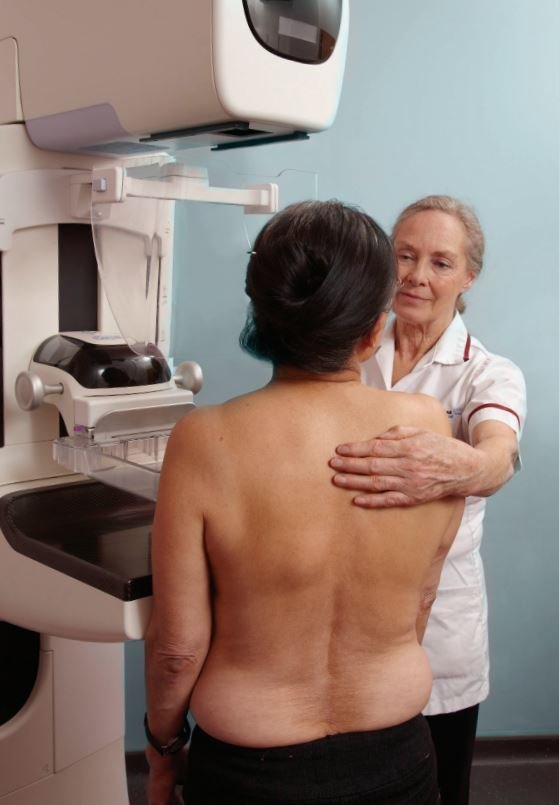
Breast cancer screening aims to find breast cancer early, when there is the best chance of being successfully treated. Screening involves having an x-ray of your breast called a mammogram. This will be taken by a female clinician.
Breast screening is for women and some trans or non-binary people between the ages of 50 and 71, every 3 years. All invitations for breast screening will soon be sent via the NHS App in the first instance (so please turn your notifications on). For those who don’t have the NHS App or do not respond, they will receive invitations either via text or by post.
You should get a letter with your results within 2 to 3 weeks. This will tell you what, if anything, you need to do next.
If you are under 50 and concerned about any aspect of breast care, please contact the surgery to make an appointment with your GP.
Useful links:
Find out more about local breast screening hereFrequently asked questions:
What is a mammogram?
A mammogram is an x-ray of the breasts. It is a method of finding breast cancer at a very early stage. A female mammographer will compress your breasts – one at a time – between two x-ray plates to get clear images. The compression only lasts a few seconds and does not cause any harm to the breasts.
Are mammograms safe?
Any x-ray involves radiation, but mammograms only require a very low dose. The risk that such a low dose could cause a cancer is far outweighed by the benefits of early detection of breast cancer.
Do mammograms hurt?
During the mammogram, the breast is tightly squeezed between two plates, which some women do find uncomfortable or mildly painful. However, this is necessary to get a clear image and only lasts for a few seconds.
How will I get my results?
Your results are usually sent by letter within 2–3 weeks. Your GP practice will also receive a copy.
If your images show no sign of cancer, you will be given the all clear and invited again for screening in 3 years’ time.
Some women will be called back for further assessment; approximately 4–5 in 100 women are invited for extra tests, which can include another mammogram, or an ultrasound and potentially a biopsy.
In most cases, further assessment does not lead to a cancer diagnosis.
Where can I find out more information?
Please use the links below for more information:
- Breast screening (mammogram) – NHS
- Breast care and screening: and easy read guide
- NHS breast screening video: what happens during a mammogram https://www.youtube.com/watch?v=9XHLNd7wO78
Cervical Screening
Cervical cancer is when abnormal cells in the lining of the cervix grow uncontrollably and eventually form a growth, often referred to as tumour. The cervix is part of the female reproductive system. It is the lowest part of the womb and is at the top of the vagina.
The main cause of cervical cancer is long lasting (persistent) infection of certain types of the human papillomavirus (HPV). HPV is a common virus, and in most people the immune system clears the infection without any problems.
Cervical cancer mostly affects women under the age of 45.
Cervical screening, which used to be called smear test, is a test to check the health of the cervix and help prevent cervical cancer. It’s offered to women and people with a cervix aged 25 to 64.
You will receive a letter when your cervical screening test is due. Please call us on 0203 405 6570 to book an appointment. How often you are invited depends on your age.
- Age Under 25 – Invites sent up to 6 months before you turn 25
- 25 to 49 – Every 3 years
- 50 to 64 – Every 5 years
- 65 or older – Only if a recent test was abnormal
As a practice we know that our patients often have concerns about attending these appointments for many reasons. If you are concerned about the procedure or have questions regarding your cervical smear please contact reception on 0203 405 6570 and ask for an appointment or telephone call with one of nurses to discuss your concerns.
Our nurses are fully trained in cervical smear procedures and will be happy to provide you with advice and guidance. For further information on cervical smears please use the following links:
The Eve Appeal – The Leading UK Gynaecological Cancers Charity
https://eveappeal.org.uk/
Macmillan Cancer Support
https://www.macmillan.org.uk/cancer-information-and-support/cervical-cancer
NHS
https://www.nhs.uk/conditions/cervical-screening/
Cervical cancer symptoms
Early cervical cancers and pre-cancerous cell changes don’t usually have symptoms. However, the most common symptoms of cervical cancer include:
- unusual vaginal bleeding, e.g. bleeding in between periods or bleeding after sex
- pain or discomfort during sex
- vaginal discharge that is an unusual colour or odour
- pain in the area between the hip bones (pelvis)
Not everyone diagnosed with cervical cancer will have symptoms. That’s why it’s important to attend regular cervical screening.
Cervical screening
Cervical screening is a way of preventing cancer. It tests for a virus called human papillomavirus (HPV). High-risk HPV can cause cervical cells to become abnormal. Virtually all cases of cervical cancer are linked to high-risk HPV.
The NHS cervical screening programme invites those eligible between the ages of 25 to 64 every 5 years. If HPV is detected, you may be invited more regularly.
A doctor or nurse will usually carry out your cervical screening test. You can ask for a female clinician. They will ask you a few questions about your period, if you have experienced any unusual bleeding, and if you are taking any hormonal medication.
You will undress from the waist down and lie on a couch; a speculum is gently inserted to access the cervix. A small brush takes a cell sample. The procedure takes under 5 minutes, with the whole visit lasting about 10 minutes.
This programme is for people without symptoms. If you experience unusual vaginal bleeding, discharge, or pelvic pain, regardless of age or your screening history, don’t wait for your screening invitation but contact your GP practice.
Frequently asked questions:
Why is cervical screening important?
Human Papilloma Virus (HPV) is the main cause of cervical cancer. It can be passed on without anyone knowing they have it, which is why it is important that people take part in cervical screening when invited. It is important that family members support women to participate in screening.
Who is the test for?
Screening is for everyone regardless of marital or relationship status, or sexual orientation. It does not matter if you have not been in a relationship, are single or you are married to a single partner. The test will not affect virginity.
How and when will I get results?
Results are now sent through the NHS App or by letter usually within 2 to 6 weeks. If your test indicates you do not have HPV, your next cervical screen will be in 5 years.
If your result indicates you have HPV, you may be invited in for more frequent tests or referred for further investigations.
Where can I learn more about it?
Read more using the links below:
- Cervical screening – NHS
- Cervical screening video about how it is done: https://www.youtube.com/watch?v=OU7fZb_sTus
- Cervical screening: easy read booklet
- The Eve Appeal – The Leading UK Gynaecological Cancers Charity: https://eveappeal.org.uk/
- Macmillan Cancer Support: https://www.macmillan.org.uk/cancer-information-and-support/cervical-cancer
Bowel cancer
Bowel cancer is cancer that starts in the large bowel (colon) and the back passage (rectum). It is also known as colorectal cancer.
Both men and women can get bowel cancer and it is more common in older people. The risk of developing bowel cancer depends on many factors, including:
- age
- family history
- genetic conditions such as familial adenomatous polyposis (FAP), Lynch syndrome, ulcerative colitis and Crohn’s disease
- diet and lifestyle
Bowel cancer symptoms
The symptoms of bowel cancer can include:
- bleeding from the back passage (rectum) or blood in your poo
- a change in your normal bowel habit, such as looser poo, pooing more often or constipation
- a lump that your doctor can feel in your back passage or tummy (abdomen), more commonly on the right side
- a feeling of needing to strain in your back passage (as if you need to poo), even after opening your bowels
- losing weight without trying
- pain in your abdomen or back passage
- tiredness and breathlessness caused by a lower-than-normal level of red blood cells (anaemia)
Bowel cancer screening
Bowel cancer screening aims to find bowel cancer early, when there is the best chance of being successfully treated.
Bowel cancer screening is available to everyone between the ages of 50 to 74 years.
All invitations to participate in bowel screening will soon be sent via the NHS App in the first instance (so please turn your notifications on). For those who don’t have the NHS App or do not respond, they will receive invitations either via text or by post.
A bowel cancer testing kit is sent in the post every 2 years to those who are eligible. You need to be registered with a GP to receive your screening invitations. The test is called FIT – Faecal Immunochemical Test (FIT) – and looks for invisible blood in the stool.
You do the test at home. The kit contains instructions of how to do the test and includes a prepaid envelope to send the sample to the laboratory for testing.
You should get the results within a few weeks. The letter will tell you what, if anything, you need to do next.
If you’re 75 or over and you wish to continue being screened for bowel cancer, you can ask for a FIT test kit every 2 years by phoning the free bowel cancer screening helpline on 0800 707 60 60.
Frequently asked questions:
Will the FIT test kit tell me if I have cancer?
No, the FIT kit test does not diagnose bowel cancer; however, the results of the test will show if there is any blood present in your sample.
What happens after I send off my sample?
Your results letter is usually sent within two weeks. If no trace of blood is found, you will simply get an all-clear with no further testing required. If there are traces of blood found in your sample, you will be invited in for further investigations, normally a colonoscopy.
Why isn’t everyone under 50 invited?
Because most bowel cancers (over 90%) occur in people aged 50 and over, the bowel cancer screening programme focuses on this age group. However, anyone with symptoms—under 50 or older—should contact their GP practice promptly.
What if I haven’t received my kit or invitation?
Check that your contact details at your GP practice are accurate and up to date.
If you are eligible and still yet to receive a kit, call the bowel cancer screening helpline on 0800 707 6060.
Lung cancer screening
Lung cancer starts in the windpipe (trachea), the main airway (bronchus) or the lung tissue.
Lung cancer is more common as you get older. Around 45 out of 100 people (around 45%) diagnosed with lung cancer in the UK are aged 75 and older.
Smoking is the most common cause (accounting for more than 70 out of 100 cases). Although people who have never smoked can also develop lung cancer.
Lung cancer symptoms
There are many different signs of lung cancer. Some lung cancer symptoms, such as a persistent cough or shortness of breath, are more common and easier to recognise than others.
It is really important to be aware of the symptoms of lung cancer – regardless of whether you have smoked or not. Lung cancer can happen to anyone so if you are experiencing any of the following, you should contact your GP practice:
- A persistent cough (that lasts for three weeks or more)
- Feeling breathless for no reason
- Repeat chest infections or chest infections that haven’t improved after having treatment
- Losing weight and/or loss of appetite
- Coughing up blood or blood in your phlegm (spit)
- A cough that changes or gets worse
- Unexplained tiredness or lack of energy
- Chest or shoulder pain
Less common symptoms include: back pain, wheezing, a hoarse voice, finger clubbing (where the tips of your fingers swell around your nail), difficulty swallowing, or a swelling in your face or neck
Lung cancer screening
There are often no signs or symptoms of lung cancer at an early stage. Lung cancer screening can find lung cancer at its earliest stage when it is easier to treat, often before you have any symptoms.
Lung cancer screening can help diagnose lung cancer as early as possible.
Screening is currently being rolled out across England and is available for eligible people aged between 55-74 years old who smoke or used to smoke and are registered with a participating GP practice.
Of those picked up through the Lung Cancer Screening Programme, 75% are diagnosed with stage 1 and 2 when treatment can be more successful.
There are two parts to lung cancer screening:
- Lung health check: After you receive a letter inviting you to take part, a patient care advisor (a non-medical professional) will call you to carry out a lung health check assessment over the phone, which takes around 15 minutes. They will ask you a series of questions about your overall health, your lung health and your smoking history. Your risk of lung cancer will be calculated and this will decide next steps.
- In person appointment: If your assessment finds that you meet a certain level of risk, you will be offered an in person appointment with a nurse and, if suitable, a CT scan of your chest. This will take place at a local mobile unit or NHS hospital.
Frequently asked questions:
I feel fine so why do I need to go?
Many people with early-stage lung cancer have no symptoms. One of the main aims of this programme is to detect lung cancer at the earliest opportunity when it is easier to treat.
We strongly recommend you take up the invitation for lung cancer screening even if you feel well.
I’m not aged 55-74. Can I be screened?
Lung cancer screening is being offered only to current or former smokers aged between 55-74 because the risk of lung cancer and the benefits of early detection through screening outweigh any potential risks or harms for this specific group.
If you are not eligible for screening but have any symptoms or concerns about your lung health, you should contact your GP practice to arrange an appointment.
Why is lung cancer screening only available to people who have smoked?
People with a history of smoking are at a higher risk of lung disease or lung cancer than people who have never smoked. However, anyone can get lung cancer so if you have any concerns or are experiencing symptoms, contact your GP practice.
Is lung cancer screening only for cigarette smokers?
No, people who smoke or used to smoke any tobacco product, including cigarettes, pipes, cigars, roll ups, hookahs or shishas, may also be eligible for free lung cancer screening.
I used to smoke so why haven’t I been invited?
To be invited for lung cancer screening, your GP practice needs to be participating in the programme and also needs to be aware that you have smoked and recorded this on your medical history.
If you think you are eligible, contact your GP practice to check your smoking record is up to date.
Where can I learn more?
Please visit these useful links:
Prostate cancer
Prostate cancer is cancer that starts in the prostate gland. The prostate gland is found at the base of the bladder and is about the size of a walnut. Prostate cancer usually develops slowly, so there may be no signs for many years.
Prostate cancer is most common in older men. On average each year 35 out of 100 (35%) new cases are in men aged 75 and over. It is also more common in Black men than in White men. It is less common in Asian men.
A man’s risk of developing prostate cancer depends on many factors. These include:
- age
- genetics and family history
- lifestyle factors
- other medical conditions
Prostate cancer symptoms
Symptoms of prostate cancer do not usually appear until the prostate is large enough to affect the tube that carries urine from the bladder out of the penis (urethra).
Most men with early prostate cancer don’t have any signs or symptoms. That’s why it’s important to know about your risk. If you do notice changes in the way you urinate, this is more likely to be a sign of a very common non-cancerous problem called an enlarged prostate, or another health problem. But it’s still a good idea to get it checked out.
Possible symptoms of prostate cancer include:
- difficulty starting to urinate or emptying your bladder
- a weak flow when you urinate
- a feeling that your bladder hasn’t emptied properly
- dribbling urine after you finish urinating
- needing to urinate more often than usual, especially at night
- a sudden need to urinate – you may sometimes leak urine before you get to the toilet.
These symptoms should not be ignored, but they do not mean you have prostate cancer. You should always contact your GP practice to discuss your symptoms.
Prostate cancer testing
There is currently no routine screening programme for prostate cancer in England.
However, the UK National Screening Committee (UK NSC) has announced a draft recommendation for a targeted prostate cancer screening programme for men with a BRCA1 or BRCA 2 genetic mutation, as this puts them at higher risk of developing prostate cancer.
If you are worried about symptoms that may indicate prostate cancer, make an appointment with your GP practice to discuss your concerns.
A family history of cancer can also indicate a higher risk.
This can mean any first-degree relative with breast, ovarian or prostate cancer. However, this term can include different levels of risk, for example men with more than one relative who has had cancer, or men whose relatives had their cancer diagnosed at a young age. Those with a family history of cancer may be eligible for genetic testing.
If you have a family history of cancer and are experiencing symptoms of prostate cancer, or if you are worried about symptoms that may indicate prostate cancer, make an appointment with your GP practice to discuss your concerns.
Learn more here:
Frequently asked questions
Why do I need an NHS Health Check?
We know that your risk of developing heart disease, stroke, type 2 diabetes, kidney disease and dementia increases with age. There are also certain things that will put you at even greater risk. These are:
- being overweight
- being physically inactive
- not eating healthily
- smoking
- drinking too much alcohol
- high blood pressure
- high cholesterol
Both men and women can develop these conditions, and having once could increase your risk of developing another in the future.
In the brain a blocked artery or a bleed can cause a stroke.
In the heart a blocked artery can cause a heart attack or angina.
The kidneys can be damaged by high blood pressure or diabetes, causing chronic kidney disease and increasing your risk of having a heart attack.
Being overweight and physically inactive can lead to type 2 diabetes.
If unrecognised or unmanaged, type 2 diabetes could increase your risk of further health problems, including heart disease, kidney disease and stroke.
What happens at the check?
This check is to assess your risk of developing heart disease, type 2 diabetes, kidney disease, and stroke.
The check will take about 20–30 minutes.
You’ll be asked some simple questions. For example, about your family history and choices which may put your health at risk
We’ll record your height, weight, age, sex, and ethnicity.
We’ll take your blood pressure.
We’ll do a simple blood test to check your cholesterol level.
What happens after the check?
We will discuss how you can reduce your risk and stay healthy
You’ll be taken through your results and told what they mean. Some people may be asked to return at a later date for their results.
You’ll be given personalised advice on how to lower your risk and maintain a healthy lifestyle.
Some people with raised blood pressure will have their kidneys checked through a blood test.
Some people may need to have another blood test to check for type 2 diabetes. Your health professional will be able to tell you more.
Treatment or medication may be prescribed to help you maintain your health.
Why do I need this check? I feel fine!
The NHS Health Check helps to identify potential risks early. By having this check and following the advice of your health professional, you improve your chances of living a healthier life.
But don’t these conditions run in the family?
If you have a history of heart disease, stroke, type 2 diabetes, or kidney disease in your family then you may be more at risk. Taking action now can help you to prevent the onset of these conditions.
I know what I’m doing wrong. How can the doctor help me?
If you would like help, we will work with you to find ways to eat healthily, reach your healthy weight, be more active, cut down your drinking, or stop smoking.
If I am assessed as being at ‘low risk’, does this mean I won’t develop these conditions?
It is impossible to say that someone will or won’t go on to develop one of these conditions. But taking action now can help you lower your potential risk.
Will everyone have this check?
This check is part of a national scheme to help prevent the onset of these health problems. Everyone between the ages of 40 and 74 who has not been diagnosed with the conditions mentioned will be invited for a check once every five years. If you are outside the age range and concerned about your health, you should contact your GP.
Useful Links
https://www.london-breastscreening.org.uk/contact-us – Main West London breast screening website
What happens during a breast screening appointment
Breast Screening for those with Learning Disabilities
Breast screening: helping women decide – GOV.UK (www.gov.uk) – in different languages